One of the most emotional conversations I have with brides is not about design.
It is about budget.
A wedding gown carries enormous emotional weight. Brides dream about it for years, save inspiration images endlessly and imagine the exact moment they will walk down the aisle. But when budgeting begins, confusion often follows.
How much should a wedding gown cost?
Should the reception gown receive equal attention?
Is couture worth the investment?
What actually matters—and what doesn’t?
After years of designing bridal couture in Chennai, I have realized that regret rarely comes from spending wisely.
Regret usually comes from spending without understanding value.
Some brides overspend emotionally on surface beauty and later struggle with comfort, structure or movement. Others focus only on lowering costs and later feel disappointed when the gown fails during the ceremony.
A wedding gown budget should not be about choosing the cheapest option or the most luxurious one.
It should be about making intelligent decisions that protect both the bridal experience and long-term satisfaction.
Especially in Chennai, where weddings often involve long ceremonies, warm climate conditions and multiple outfit changes, budgeting requires thoughtful planning.
In this guide, I want to help brides understand how to approach wedding gown budgeting calmly, realistically and without regret later.
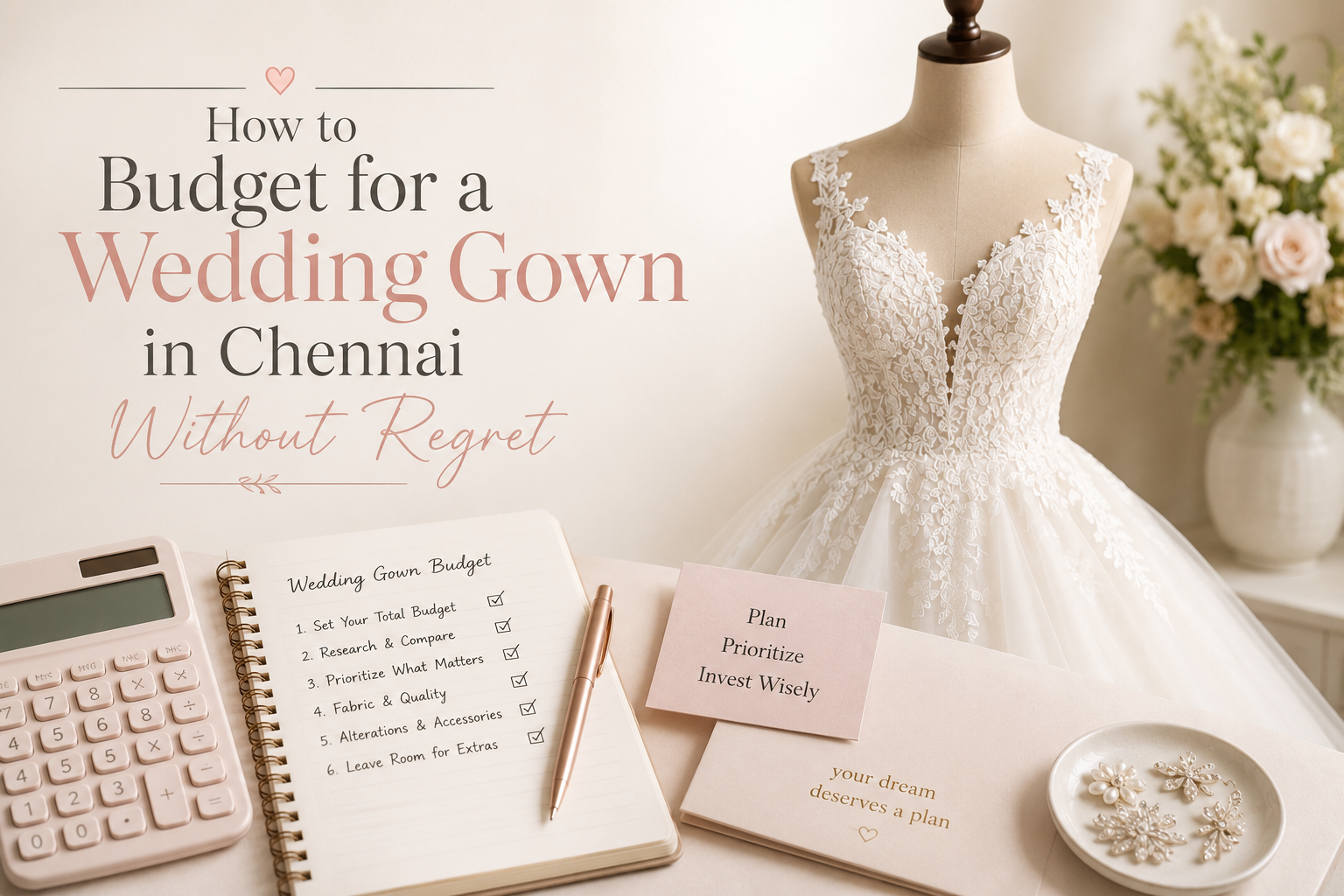
The first mistake many brides make is beginning the bridal process without a clear budget structure.
They start collecting inspiration before understanding:
Their overall wedding budget
The type of ceremony
The number of outfits required
The level of customization needed
The practical realities of Chennai weddings
As a designer, I always encourage brides to think strategically first.
Many brides assume the gown budget only refers to the dress itself.
But bridal budgeting often includes:
Design consultation
Fabric sourcing
Embroidery
Internal structure
Fittings
Alterations
Veil
Accessories
Can-can layers
Gloves or detachable sleeves
Train management additions
Without planning for these details, brides frequently exceed their original budget unexpectedly.
For a church wedding, the ceremony itself should shape the budget.
Long ceremonies require:
Better structure
Stronger internal corsetry
Breathable fabrics
More fitting precision
Better movement engineering
These details may slightly increase cost, but they dramatically improve the bridal experience.
A gown designed only for appearance often becomes uncomfortable within hours.
One thing brides rarely realize initially is that emotional confidence has value too.
A properly fitted gown reduces anxiety.
It improves posture.
It helps the bride feel calm and present.
That emotional ease becomes part of the memory of the wedding day.
And in my experience, brides never regret investing in comfort and confidence.
Many Chennai brides today choose both a wedding gown and a reception gown.
But budgeting for two major outfits requires balance.
A wedding gown is usually ceremony-focused.
It prioritizes:
Structure
Elegance
Movement
Modesty balance
Posture support
A reception gown often prioritizes:
Glamour
Lighting impact
Fashion styling
Stage presence
Dramatic photography
Because of these differences, cost distribution may vary significantly.
This surprises many brides.
Reception gown often involve:
Heavy embellishment
Crystal work
Metallic embroidery
Fashion draping
Surface detailing
These elements increase labour time significantly.
Meanwhile, some minimalist couture wedding gown rely more on structural engineering than embellishment.
So brides should avoid assuming the wedding gown will automatically be the most expensive piece.
Some brides dream about the church aisle moment their entire lives.
Others care more about the reception entrance and celebration photographs.
Neither priority is wrong.
But understanding emotional importance helps distribute the budget more intentionally.
One of the smartest things a bride can do is divide her bridal wardrobe budget realistically from the beginning.
Many brides invest heavily in the first gown they see emotionally and later struggle to budget for:
Reception wear
Accessories
Styling
Alterations
Footwear
Veils
Balanced budgeting creates flexibility and reduces stress later.
A church wedding gown is often worn for:
The ceremony
Family photographs
Formal portraits
Some reception moments
This means comfort and endurance become extremely important.
A reception gown may be worn for fewer hours but photographed under intense lighting and stage conditions.
Both outfits require different technical priorities.
If budget adjustments become necessary, I usually advise brides to simplify embellishment before reducing structural quality.
Good structure affects:
Posture
Comfort
Movement
Photography
Confidence
Those elements influence the entire bridal experience.
You can explore more about couture bridal construction here: Couture
One of the biggest budgeting mistakes I see is spending emotionally on things that do not improve the actual bridal experience.
Many brides initially associate heavy embellishment with luxury.
But excessive surface work often:
Increases gown weight
Restricts movement
Creates fatigue
Distracts from silhouette balance
Elegance is usually created through proportion and structure—not excess decoration.
Trend-focused designs may feel exciting initially, but they often look dated within a few years.
Timeless design usually creates better long-term satisfaction.
Especially in a Christian wedding ceremony, calm elegance often photographs more beautifully than aggressive trend styling.
Trying to reduce costs using poor-quality fabric often backfires.
Cheap fabric may:
Wrinkle easily
Lose structure
Reflect lighting poorly
Become uncomfortable in Chennai humidity
This affects both comfort and photography quality.
Over time, brides realize fabric quality matters far more than they expected.
One of the hardest things for brides to understand initially is that price alone does not define quality.
But quality always reveals itself during wear.
A properly structured gown supports the body naturally.
The bride is not constantly adjusting straps, fixing posture or managing discomfort.
That support comes from:
Internal corsetry
Proper seam engineering
Weight balancing
Fit precision
Fabric quality changes:
Drape
Breathability
Lighting interaction
Wrinkle resistance
Silhouette definition
These differences become especially visible during long wedding days.
This is something brides often notice only during fittings.
A good gown creates calmness.
The bride feels secure, stable and elegant rather than tense or self-conscious.
That emotional comfort has enormous value.
Especially during a church ceremony where presence and poise matter deeply.
Learn more about ceremony-focused bridal couture here: Altar
After years of working with brides, I usually recommend a few practical budgeting principles.
Rushed bridal timelines often create:
Extra charges
Limited design flexibility
Compromised fittings
Stress-driven decisions
Starting early creates more control over spending.
A perfectly fitted simple gown almost always looks more luxurious than an ill-fitted heavily embellished gown.
Fit creates elegance.
Some brides create detachable elements such as:
Overskirts
Sleeves
Veils
Trains
This allows one gown to transition between ceremony and reception, reducing overall spending.
Not every bride needs dramatic couture.
But every bride deserves:
Comfort
Confidence
Reliable construction
Emotional ease
Budgeting becomes easier when priorities are clear.
Budgeting for a wedding gown in Chennai should never feel like a battle between beauty and practicality.
The goal is not simply to spend less.
The goal is to spend wisely.
A thoughtfully designed gown supports the bride physically, emotionally and visually throughout one of the most meaningful days of her life.
When brides understand the difference between price and value, budgeting becomes calmer and far more intentional.
Years later, brides rarely remember every detail of what they spent.
But they always remember:
How the gown felt
How confidently they walked
How comfortable they remained
How present they felt during the ceremony
And those experiences are what truly matter.
The budget depends on customization, fabric, structure and design complexity. Brides should also account for fittings, accessories and alterations.
Yes. Wedding gown and reception gown serve different purposes and often involve different construction and embellishment requirements.
Many brides overspend on heavy embellishment and trend-based details instead of investing in fit, structure and fabric quality.
A custom gown offers better fit, comfort, movement and emotional confidence, especially for long ceremony weddings.
Ideally, brides should begin planning their bridal wardrobe budget at least 4–6 months before the wedding to allow time for design and fittings.
Luxury wedding gowns in Chennai, Christian bridal gowns, reception gowns, groom tuxedos, and bespoke wedding suits - handcrafted by La Fantaisie Wedding Atelier. We design Christian wedding gowns, white bridal gowns, custom wedding dresses, luxury reception gowns, groom tuxedos, wedding suits, and coordinated couple Couture for brides and grooms across Chennai and Tamil Nadu.
Every gown and tuxedo is created under the artistic direction of Rachel J. Amirtharaj, known for couture corsetry, sculpted silhouettes, hand embellishment, and precision tailoring-making La Fantaisie one of the best wedding gown designers in Chennai and a rising name among top Christian bridal designers in India.
For brides searching for Christian wedding gowns Chennai, bridal gowns Chennai, designer wedding gowns Chennai, and grooms seeking luxury tuxedos Chennai or wedding suits Chennai, La Fantaisie stands as the trusted couture house for couples who want handcrafted elegance for their once-in-a-lifetime day.